
Your website is more than a digital brochure.
It’s your handshake, your first impression, and often the deciding factor behind whether someone donates, volunteers, or… just keeps scrolling.
When a nonprofit website is well-designed and well-maintained, it creates a smooth user experience for visitors, helping you raise funds, build trust, and connect with the people who need you most.
Sound like a tall order?
Don’t worry; that’s exactly why we’re sharing this post of the 13 best nonprofit websites we’ve ever seen. Each one shows you how charities and nonprofits can combine design, storytelling, and smart maintenance to create a site that not only looks good, but actually drives action.
|
TL;DR – Key Takeaways
|
13 Best Examples of Nonprofit Websites
There are good nonprofit websites, and then there are donation sites that make you stop scrolling, grab your wallet, donate, become a member, and maybe even tear up a little.
Let’s check out those ones.
1. PSE Healthy Energy (Best nonprofit website for science-first design)

Why we picked it: PSE Healthy Energy’s website is clear and credible. Right from the homepage, you get a clean sense of who the business is, what it does, and why it matters. The site leads with scientific proof, impact, and a concern for public health.
Why it works:
- Strong content planning and organization. Clear menu items like About PSE, Our Work, Research Focus, News, and Contact Us make it easy to navigate.
- Recent activity and financial transparency. The organization features recent research tools, publications, data tools, and other material to show ongoing work.
- Team and credibility. The staff section shows that people with real expertise are behind the scenes, which builds authority.
Takeaway: Show expertise and recent results. The best websites for nonprofits clearly explain current developments and who’s doing the work.
2. Starr King School for the Ministry (Best nonprofit website design for values-driven storytelling)

Why we picked it: Starr King’s site is a great example of a faith-based nonprofit that combines a deep academic mission and spiritual values with a clean website design and regular maintenance. You see how the organization operates, who’s leading the community, and where to get involved.
Why it works:
- Every page builds a cohesive narrative. The mission, values, and identity are woven consistently through every page.
- Typography and tone match their values. The fonts, warm colors, and inclusive language echo the non-profit’s theological roots.
- Strong use of named leaders and voices. From faculty listings to blog posts, the site highlights the people driving the mission, not just the programs.
Takeaway: Put a spotlight on your people and values. Show the faces, names, and roles, and let values live visibly as you guide people toward donating or joining your organization.
3. SMASH (Best nonprofit website UX for showcasing impact metrics)

Why we picked it: SMASH doesn’t waste a pixel. The moment you land, you know what the company does, who it serves, and how well it’s working. Stats, visuals, mission, and outcomes are all right there, designed to earn trust and drive action.
Why it works:
- Impact metrics front and center. The homepage immediately hits you with SMASH’s numbers, like students served, graduation rates, and outcomes in STEM fields.
- Microinteractions done well. Hover effects, subtle animations, and sliding carousels are used to support the user journey, not distract from it.
- A layered visual structure that mirrors the pipeline. As you scroll, you follow the journey from students to scholars to alumni. This narrative is a subtle visual metaphor that reinforces the nonprofit’s mission of creating long-term higher education representation.
Takeaway: If your nonprofit aims to tell a story of transformation, structure your website like a journey that mirrors your impact pipeline
4. The Trevor Project (Best charity website for community support)

Why we picked it: The Trevor Project website leads with empathy and interactivity to help those in crisis, donors, and supporters connect instantly with resources and impact.
Why it works:
- Live identity map builds community. You can see where people are currently accessing Trevor’s resources or donating. It gives visitors a sense of solidarity.
- Real voices and lived experience. The site features photos, quotes, and personal stories from youth who have engaged with Trevor’s services.
- Mission clarity in every pathway. Whether you click “Reach a Counselor,” “Meet Friends,” “Donate,” or “Volunteer Now,” each call-to-action button is clear and aligned with Trevor’s goals.
Takeaway: When your mission involves emotional urgency or life-saving services, your entire website should reflect that immediacy.
5. Civicorps (Best-designed nonprofit website for community connection)

Why we picked it: Civicorps instantly impresses because it balances mission, impact, and an inviting look. You’re met with purposeful statements (job training, environmental service, youth development), multiple calls to action (apply, donate, refer), and real support.
Why it works:
- Audience connection through regional identity and navigation. Bold “We invest in the Central Valley” messaging and targeted menus anchor visitors in local causes and a strong sense of place and purpose.
- Crisp, intentional copy. Each word carries weight, with concise headers and descriptions that guide without overwhelming.
- Impact-forward visual storytelling. The homepage introduces major initiatives with a short headline, one-line summary, and a link to dive deeper.
Takeaway: Put your highest-impact actions (donate, volunteer, partner, etc.) in visible spots above the scroll and repeat them consistently throughout the site to guide users toward action.
6. SF Black MBA (Best nonprofit website for networking-driven associations)
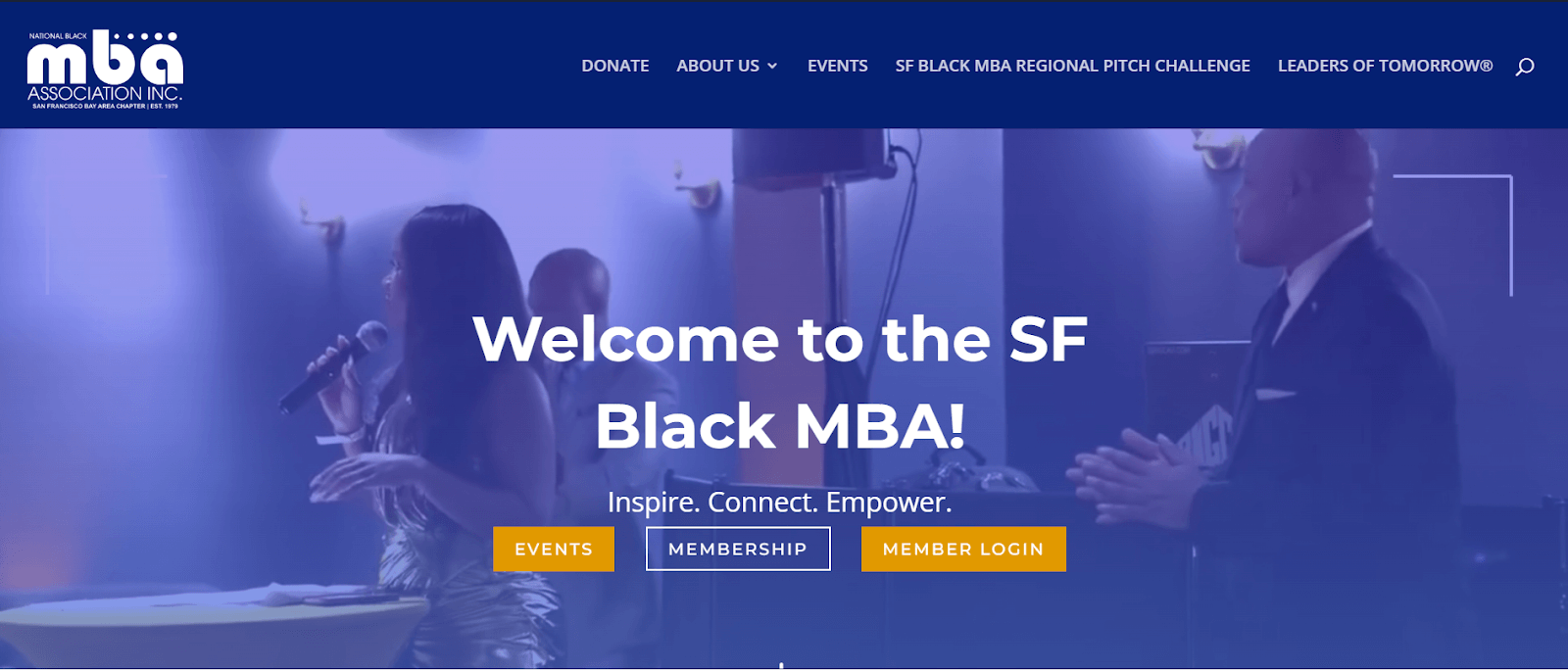
Why we picked it: SF Black MBA puts identity front and center with images and a clear mission. That level of brand clarity is what transforms a passive visitor into a future member, partner, or donor.
Why it works:
- Visual identity with purpose. Through its color scheme, the user interface evokes prestige, community pride, and energy, which aligns with the organization’s goal of empowering black professionals.
- Membership-first user journey. Most charitable organizations prioritize donations. This one prioritizes memberships.
- Localized impact. This site tells you exactly what the Bay Area chapter is doing and how to get involved locally.
Takeaway: Let your visual identity do some of the heavy lifting. Nonprofit profiles with a distinct voice, mission, or audience should have a website that showcases it.
7. Prairie State Legal Services (Best NGO website for mobile accessibility features)

Why we picked it: Prairie State Legal Services (PSLS) does an excellent job of aligning web design with audience needs. As a legal nonprofit serving vulnerable communities, accessibility and ease of use are crucial.
Why it works:
- Impact stories front and center. The “Client Success Stories” section leads with real names and situations, which builds empathy.
- Accessibility baked in. Responsive design, high-contrast text, simple headings, and plain language make the site easy to navigate for all users.
- Service overview at a glance. Instead of walls of text, the homepage provides quick descriptions of the nonprofit’s offerings, so visitors know right away whether PSLS can help them.
Takeaway: Accessibility and clarity are what determine whether someone in need connects with your services.
8. Lead Liberated (Best nonprofit website for values-led branding)
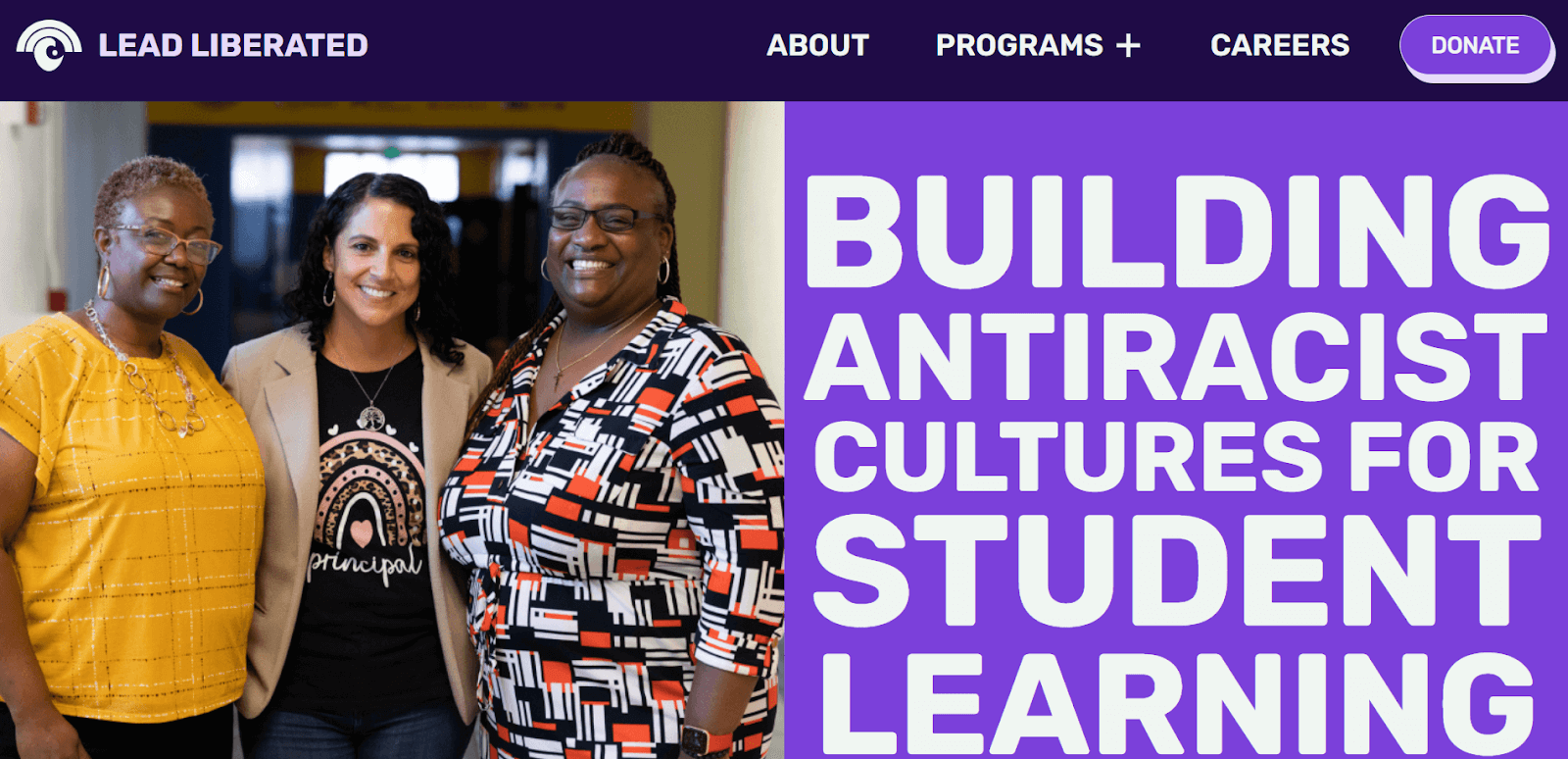
Lead Liberated uses bold colors, authentic imagery, and values-driven messaging to create a site that feels human and community-centered.
Navigation is simple, calls to action are purposeful, and the web design reinforces the business’s mission of leadership through healing and liberation.
9. Oahu SPCA (Best charitable foundation website for user engagement)

Oahu SPCA nails user engagement with strong visuals, playful touches, and crystal clear paths for action. The “Make A Splash” pop-up is cute and grabs attention without being pushy. Adoption, vet services, and volunteer sections are all easy to find and use.
The takeaway is to use personality (GIFs, pop-ups, video) tied to real mission moments to draw people in, but pair those with visible, easy actions.
10. Farm Africa (Best nonprofit website for immersive animation)
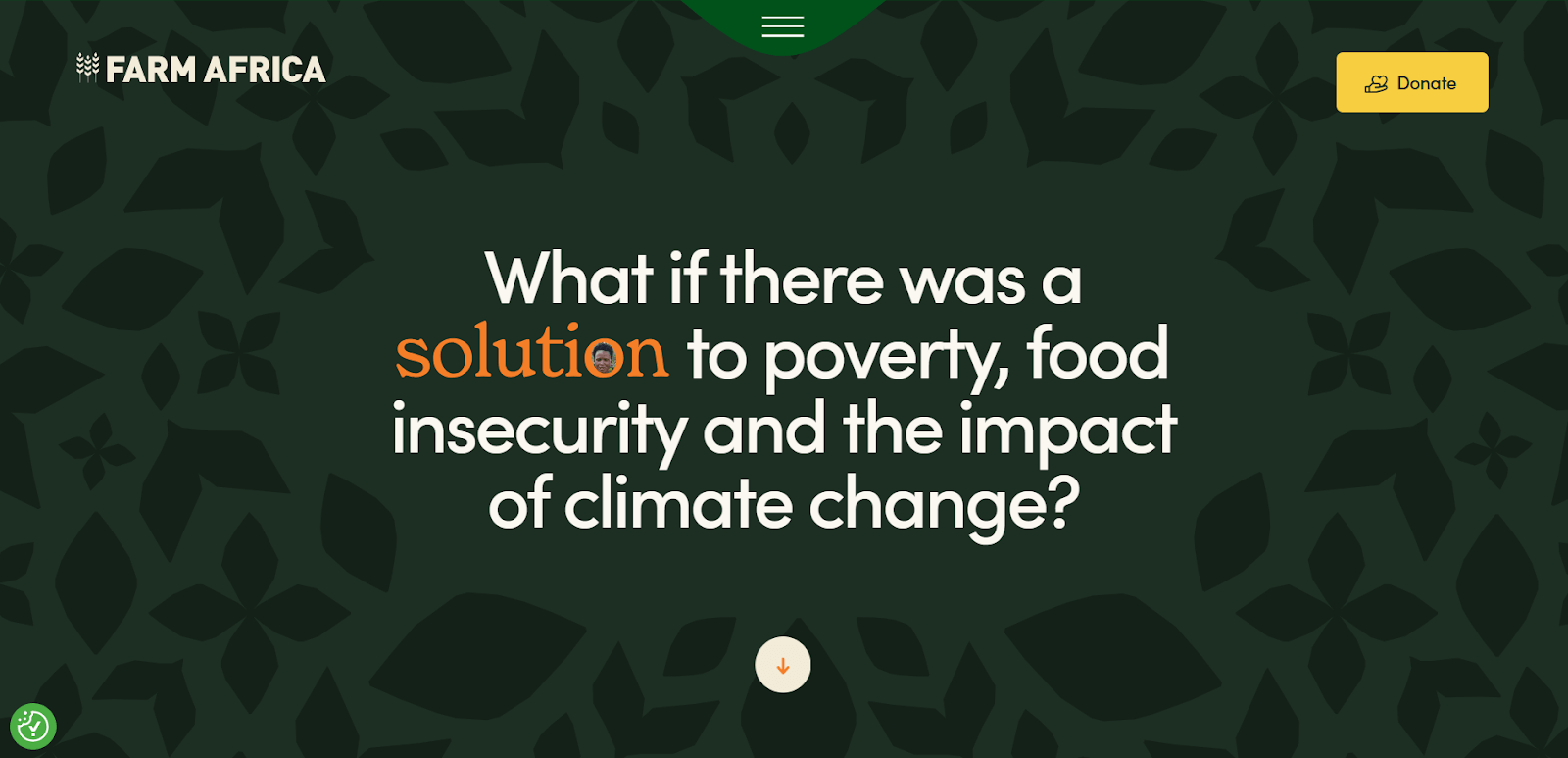
Farm Africa has created an incredible, visually engaging nonprofit website. The hero immediately grabs attention with a mission statement that literally comes alive with a video that plays inside the letter “O,” zooming in as you scroll for a dynamic storytelling effect.
As you move down the page, clever animations, motion transitions, and bold graphics highlight the impact of your actions. The donation platform is especially strong, with clear choices (single or monthly), a transparent “Where your money’s going” chart, and tangible examples of what each amount funds.

Farm Africa is proof that web design can make giving feel inspiring instead of transactional.
11. Good2Know Network (Best nonprofit website for educational resources)
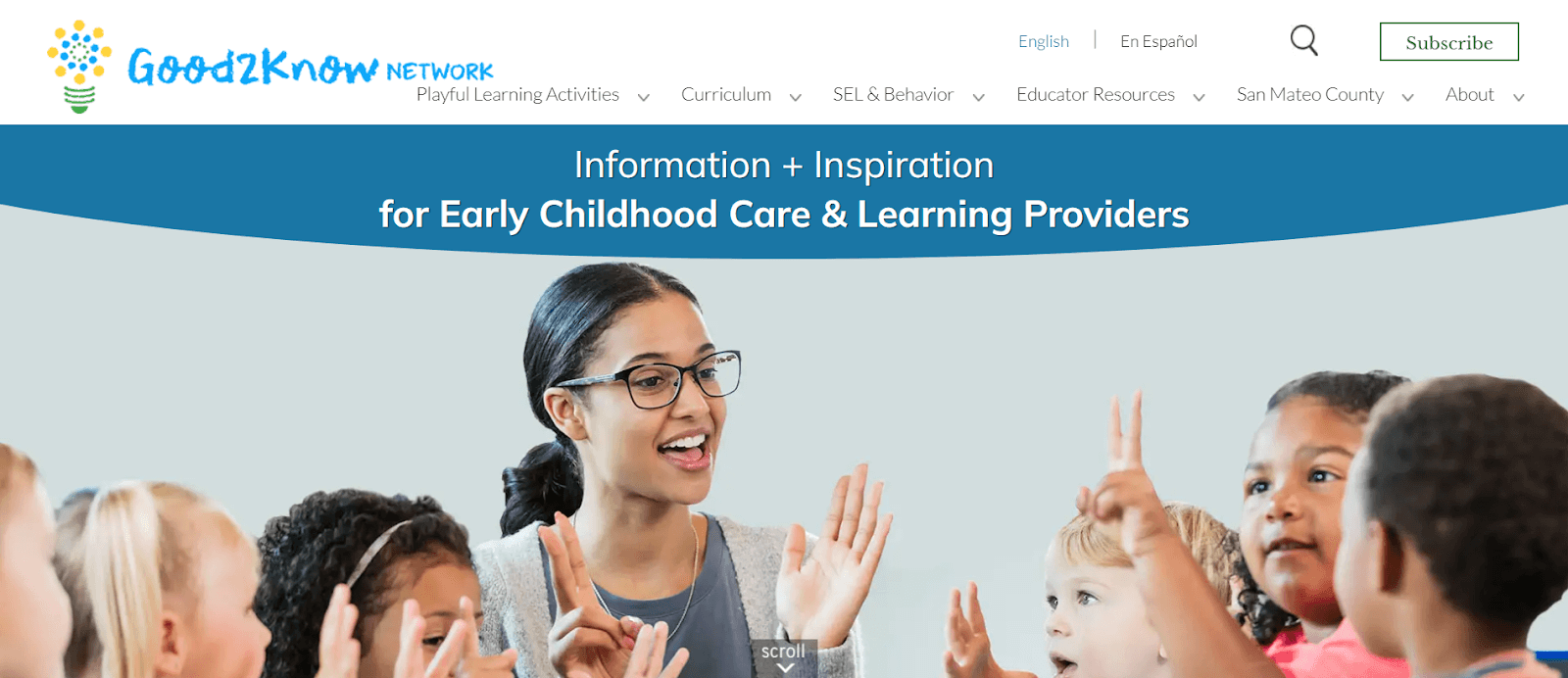
Good2Know Network stands out as a vibrant, resource-driven site for early childhood educators in San Mateo County.
Its multilingual support, accessible web design (WCAG standards for readable text, a clear navigation menu, and inclusive features), and seamless content organization make it easy for busy providers to quickly find tools and inspiration.
12. Integrated Healthcare Association (Best nonprofit website for resource-heavy navigation)

IHA’s website balances authority and usability for a complex healthcare audience. The navigation menu makes it easy to explore products, resources, and careers, while brand elements reinforce credibility and user engagement.
The integration with marketing tools ensures IHA can stay connected with stakeholders, which turns the site into a communications hub and a recruitment engine.
13. The Sequoia Awards (Best nonprofit website for streamlined scholarship applications)
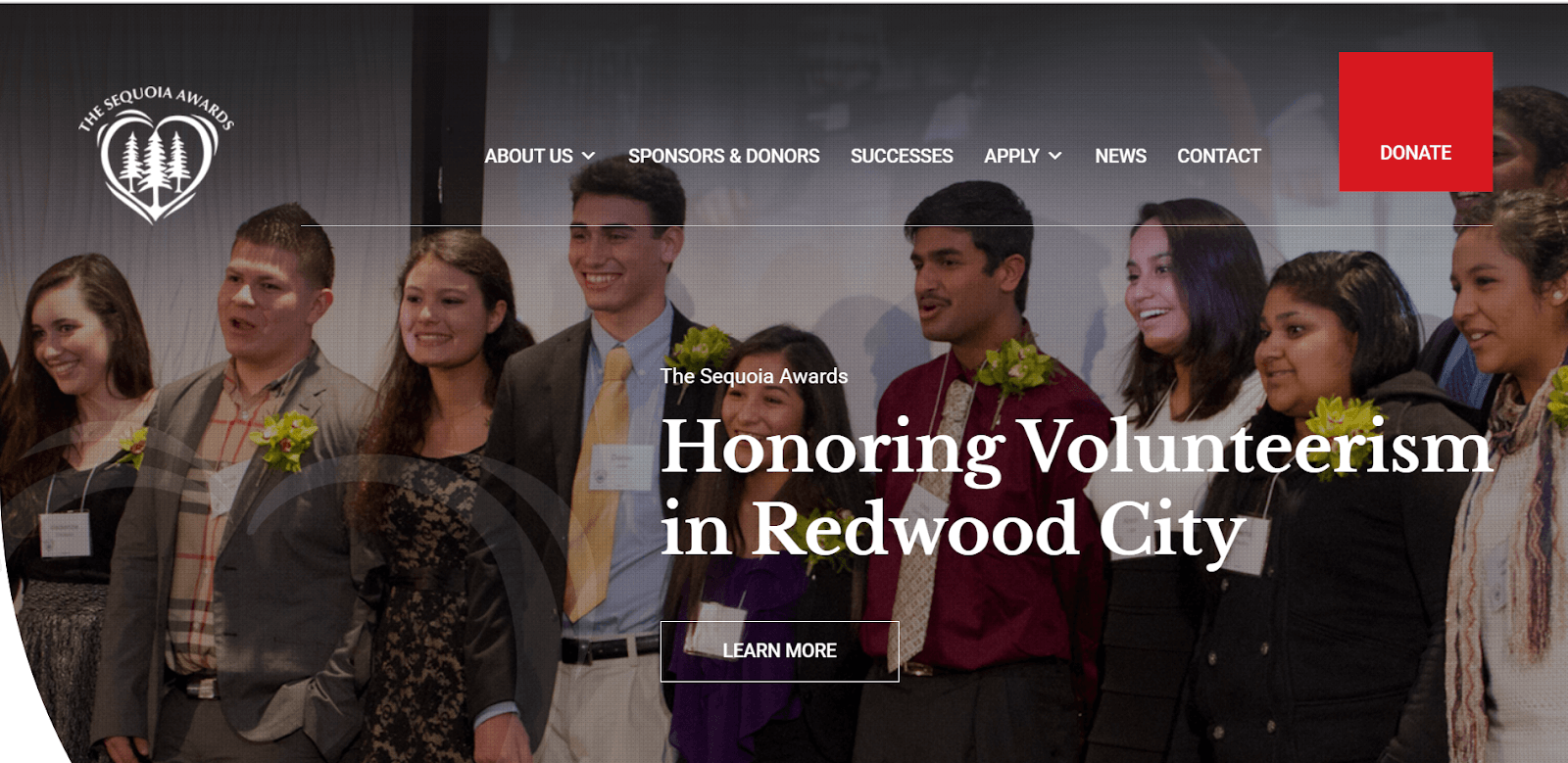
The Sequoia Awards’ site stands out for its dual focus on empowering students and engaging donors. The online scholarship application is fully responsive, which allows students to upload documents directly from any device.
On the donor side, WooCommerce powers easy ticketing and online giving, while a gallery of past award dinners adds community spirit and financial transparency.
10 Nonprofit Website Best Practices To Use on Your Site
A great nonprofit website is a people-centered website that builds trust, inspires action, and helps you achieve your mission securely.
In our experience, the best nonprofit websites follow 10 key practices that consistently get results. Trust us, you’ll want to replicate them:
1. Branding and mission statement
Your mission is the reason people get involved or donate. Choose a user interface with a simple navigation menu, bold design, clear taglines, and visuals that make your values obvious within seconds.
2. Human images and stories
Stock photos don’t build empathy. Real, people-centered images and videos from your community or beneficiaries make the mission tangible and help visitors connect emotionally.
3. Accessibility and navigation
Website ADA compliance ensures people with disabilities can use your site through screen readers, visual storytelling, high-contrast text, and other tools. Pair that with intuitive navigation so users can find what they need without barriers.
4. Fast and reliable performance
More than half of nonprofit site traffic comes from mobile users. Prioritize mobile responsiveness, quality hosting, and uptime monitoring to ensure your cause is always reachable.
5. Secure online donations
Donors need to know that their data and money are safe. By securing WordPress with SSL certificates, secure gateways, and trust signals, you can increase completed donations.
6. Success stories and proof of impact
People give when they see results. Showcase volunteer success stories, testimonials, case studies, and fundraising impact metrics to show your program’s impact and prove your nonprofit delivers lasting change to the community.
7. Events and volunteer opportunities
A clear, updated calendar and easy sign-up and donation forms encourage supporters to get involved. The best nonprofit sites push opportunities to act, not just knowledge and insight.
8. Team and leadership transparency
Highlight your staff, board, and leadership, and link to their social media. Faces, names, and roles build accountability and reassure visitors that real people are behind the mission.
9. Content and SEO
Educational content and strong technical SEO make your nonprofit visible on Google and LLMs (like ChatGPT). A content-rich website with insightful blog posts, resources, and metadata reaches supporters far beyond your immediate circle.
10. Ongoing maintenance and security
You need nonprofit website maintenance to ensure your site performs at 100%, avoid downtime and hacks, and improve the user experience.
Regular updates, monitoring, and backups are the behind-the-scenes practices that keep your interactive features working and your charity site trustworthy and effective.
Ready to Get Started Today on Your Nonprofit Website?
Whether you need a brand-new site or are simply thinking of getting your current one under control, we can help in two ways:
- New website: Our sister company, State Creative, is a leading web design agency that builds high-performing, custom websites from scratch. If your nonprofit is starting fresh or needs a complete redesign, the team delivers sites that look beautiful and convert visitors into supporters.
- Website maintenance: At StateWP, we keep nonprofit websites fast, secure, and reliable with WordPress maintenance plans. From plugin updates and uptime monitoring to security improvements and performance optimization, our tiers fit tax-exempt organizations of all sizes.
We offer three different WordPress care plans for nonprofit organizations:
|
Starter $99/mo (billed annually) Best for nonprofit sites that need regular maintenance without too much complexity. |
Premium $314/mo (billed annually) Best for content-heavy sites and sites that drive leads/donations. |
Elite $630/mo (billed annually) Best for nonprofits with complex websites with eCommerce, LMS, or advanced functionality. |
Our WordPress support plans are helping nonprofit organizations reach more people.
Lead Liberated came to us after being overcharged and underserved by their previous vendor. With StateWP, they get proactive updates, monthly reporting, and the peace of mind that their site is always protected. On top of that, we handle the uploading and optimization work they used to do themselves, which saves them a minimum of 25 hours each year.
“Partnering with StateWP for our website maintenance has given us peace of mind. As a small nonprofit, we don’t have the internal resources to devote to technical upkeep. Knowing that StateWP’s team is monitoring our site and handling any necessary updates or security issues allows us to focus on our core mission. Their reliable and expert support is invaluable.”
– John Westerlund, Lead Liberated.
When SMASH split from its fiscal sponsor, it needed a partner who could secure and manage its site. We did a quick website health check and handled updates, optimization, and security. As a result, the site now runs at an A performance grade on GTMetrix, and our team continues to support the company with regular updates, security monitoring, and even new builds, like a custom blog module.
“StateWP has been an incredible partner. Their team is responsive, knowledgeable, and proactive – exactly what you want when managing a nonprofit site. The dashboard is clean and intuitive, and any time we’ve needed support, they’ve delivered quickly and clearly. It honestly feels like they’re part of our team.”
– Elena Mateus, SMASH
If you want to take the next step, start with a free website audit and a commitment-free chat with our CEO, Garrett.
Best Nonprofit Websites: FAQs
Got questions about the best websites to create user engagement for nonprofit organizations? Below, we’ve rounded up quick, research-backed answers to the most common nonprofit website questions.
What’s the best way to build an excellent nonprofit website?
The best way to build an excellent nonprofit website is to combine clear branding, user-focused design, content planning, and reliable maintenance. Whether you’re a small nonprofit or one of the major international relief organizations, you should focus on:
- A mission statement that’s visible above the fold
- Mobile optimization (53% of nonprofit web traffic comes from mobile)
- Improving load times to ensure visitors stay on site
- Clear calls to action and an easy-to-find donation page
- Secure donation systems and transparent impact stories
- Digital fundraising campaigns to grow traffic and donations
- A monthly plan from a leading website maintenance agency
Does my nonprofit website need a redesign?
Your nonprofit website may need a redesign if it shows:
- Slow performance. If your site takes more than 3 seconds to load, 53% of mobile users abandon it.
- Outdated design. Dated templates hurt the user experience, trust, and donations.
- Low conversions. Donations, sign-ups, or volunteer inquiries are lagging despite steady traffic.
- Sporadic updates. Staff struggle with adding events or content management.
- Effects of neglected maintenance. The site simply doesn’t work like it used to. It’s glitchy and vulnerable to attacks.
How important is website maintenance and security for nonprofits?
Website maintenance and security are crucial for nonprofits.
A nonprofit website is often the main gateway for donations, volunteer sign-ups, and donor trust. If your site goes down, runs slowly, or gets hacked, you risk losing funding and credibility.
Affordable website maintenance (that includes regular updates, speed optimization, and strong security measures) keeps your website reliable, protects donor data, and ensures supporters can use your donation page with confidence.
What is the best website builder for a nonprofit?
For most nonprofits, WordPress is by far the best website builder.
It’s affordable, open-source, and powers more than 40% of all websites, which gives nonprofits flexibility, SEO strength, and access to thousands of plugins for donations, events, and multilingual content.
Other content management systems like Squarespace or Wix can work for smaller organizations, while Shopify is great for e-commerce nonprofits. Drupal and Joomla are also options to consider if you have an in-house dev team.
What is the best hosting for nonprofit websites?
The best hosting for nonprofit websites is one that balances speed, security, and support because downtime or breaches can directly cost donations and trust.
At StateWP, our premium hosting combines WordPress-optimized servers, daily backups, uptime monitoring, and advanced security. The best nonprofit websites also benefit from dedicated maintenance and support, so sites stay fast, protected, and reliable without draining precious staff time or budgets.